The Heritage & Research Center at Saint Mary's  

Life in Community
 

The artifacts gathered here offer a rare and intimate view into the rhythms of daily convent life — the tools, garments, and handcrafted objects that shaped the lived experience of Catholic women religious across more than a century of ministry and devotion.

"Behind every habit, every hand-cobbled shoe, every carefully starched halo was a life organized around prayer, work, and community — an existence as demanding as it was devoted."


1
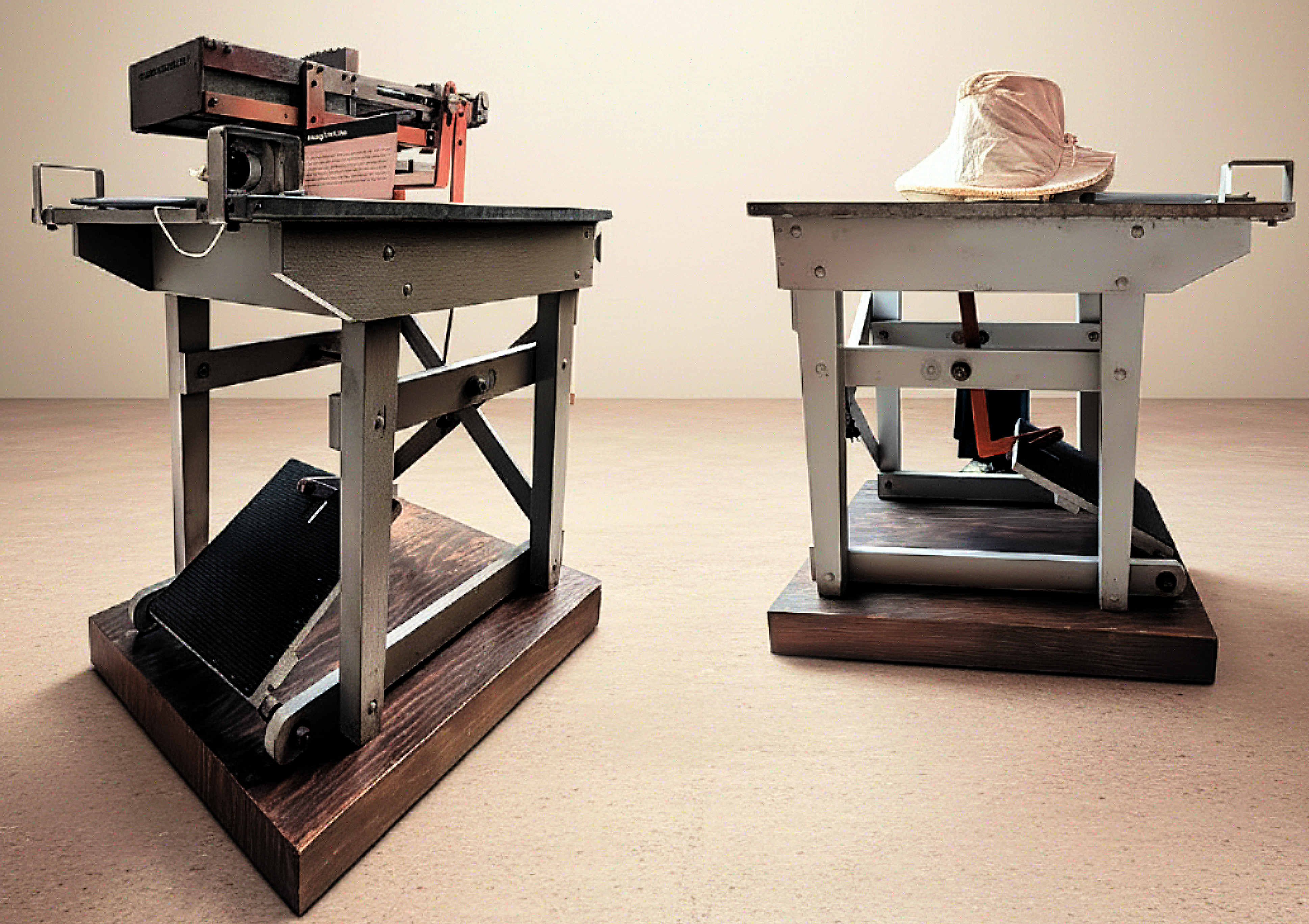
Sisters of the Holy Cross Fluting Machine

Exhibit Item 1

Sisters of the Holy Cross Fluting Machine

Sisters of the Holy Cross


The fluting machine, often an antique hand-cranked device, utilized heated fluted metal rollers to shape starched fabric with precision and consistency. Sisters fed stiffened cloth through these rollers to produce the crisp, even pleats — known as flutes — that formed the distinctive starched cap and halo worn as part of the Holy Cross habit.

This painstaking process was repeated regularly throughout a sister's life, requiring both skill and patience. The fluted halo became one of the most recognizable and iconic features of the Holy Cross habit, a visual signature of the congregation recognized across the schools and hospitals they served.
2
Sisters of the Holy Cross Doll with Habit

Exhibit Item 2

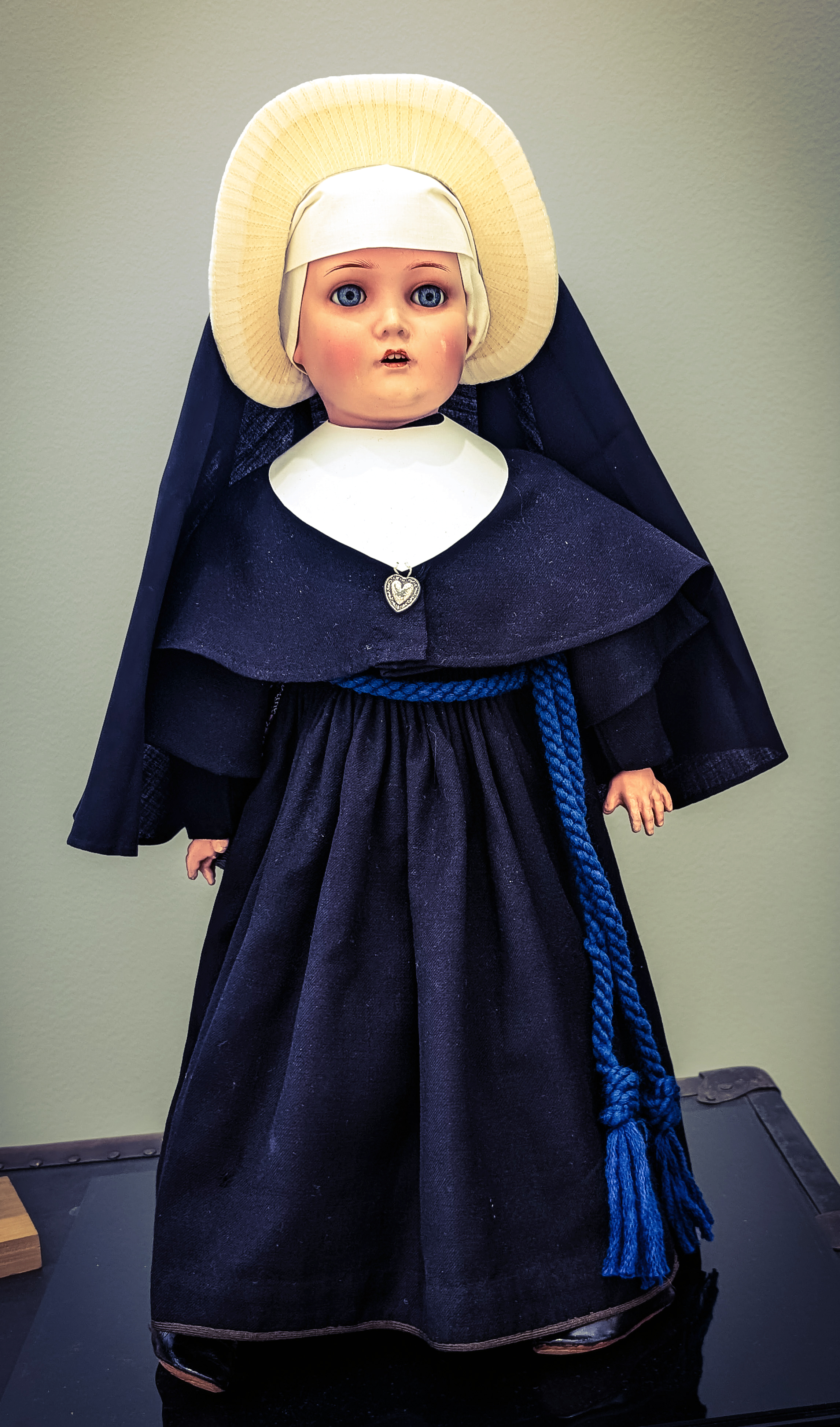
Sisters of the Holy Cross Doll with Habit

Sisters of the Holy Cross


This vintage doll displays the original habit of the Sisters of the Holy Cross in faithful miniature detail. The most distinctive feature is the starched, fluted "halo" — the iconic headdress produced by the fluting machine and worn as a hallmark of Holy Cross identity — along with the characteristic heart pendant worn at the breast.

Habit dolls like this one served as teaching aids, commemorative objects, and affectionate tokens of community life. They allowed sisters, students, and families to appreciate the craft and symbolism embedded in religious dress, preserving visual memory of a habit that has since been modified or retired.

3
Women Religious Habit Dolls

Exhibit Item 3

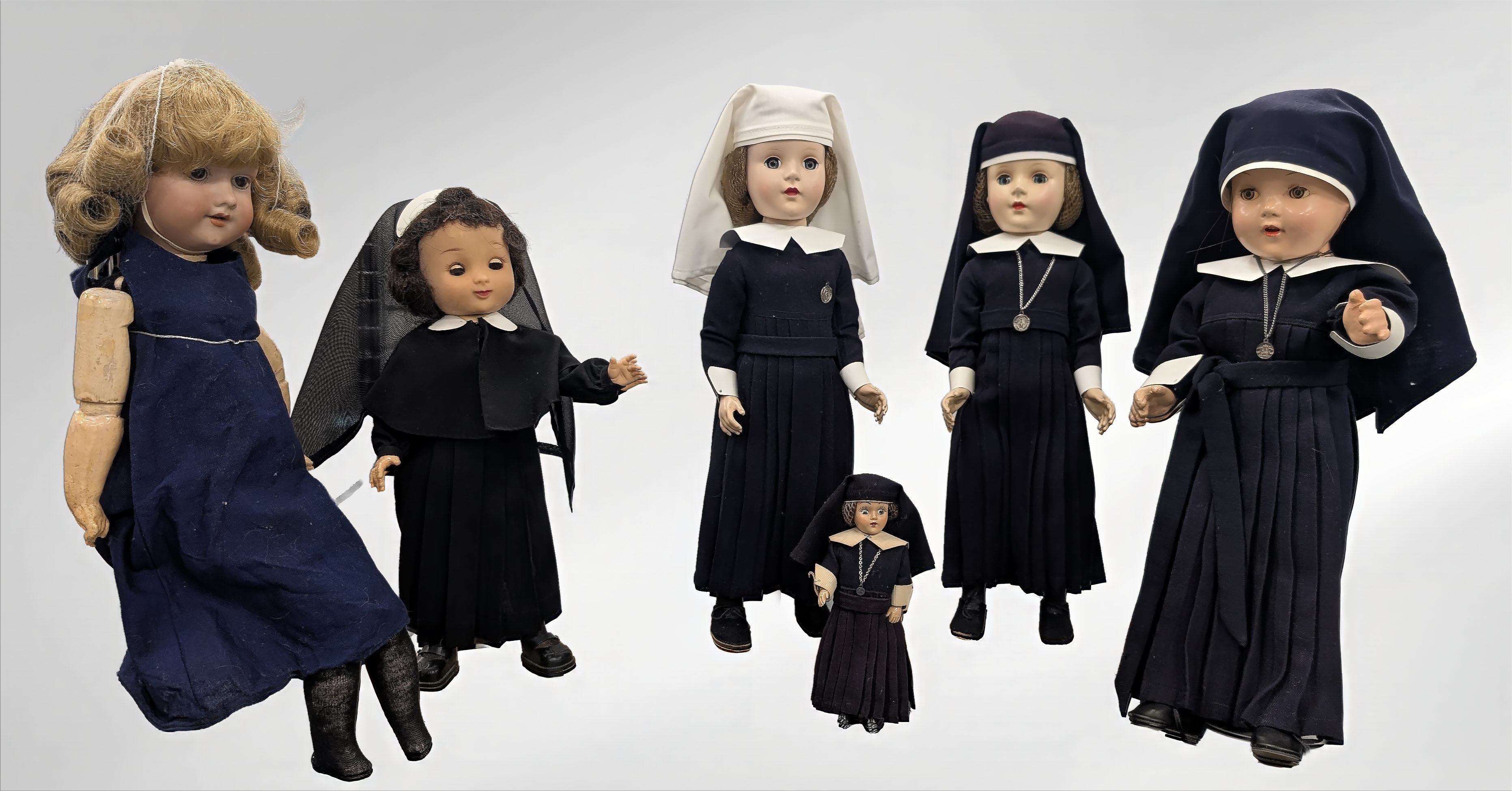
Women Religious Habit Dolls

Multiple Congregations


These collectible figures are dressed in the traditional and modified attire worn by Catholic sisters and nuns across different congregations and eras. Each doll reflects the distinct habit of its congregation — from the severe black serge of enclosed orders to the bright colors adopted by missionary communities — capturing decades of change in women religious dress.

Habit dolls have long served as teaching tools, helping students and novices learn the visual language of religious life; as historical keepsakes preserving habits no longer worn; and as tokens of appreciation given by communities to honor the work of the sisters among them. Together, this collection offers a striking visual survey of the diversity within American Catholic women's religious life.

4
Sister Effie's Cabinet

Exhibit Item 4

Sister Effie's Cabinet

Our Lady of Victory Missionary Sisters


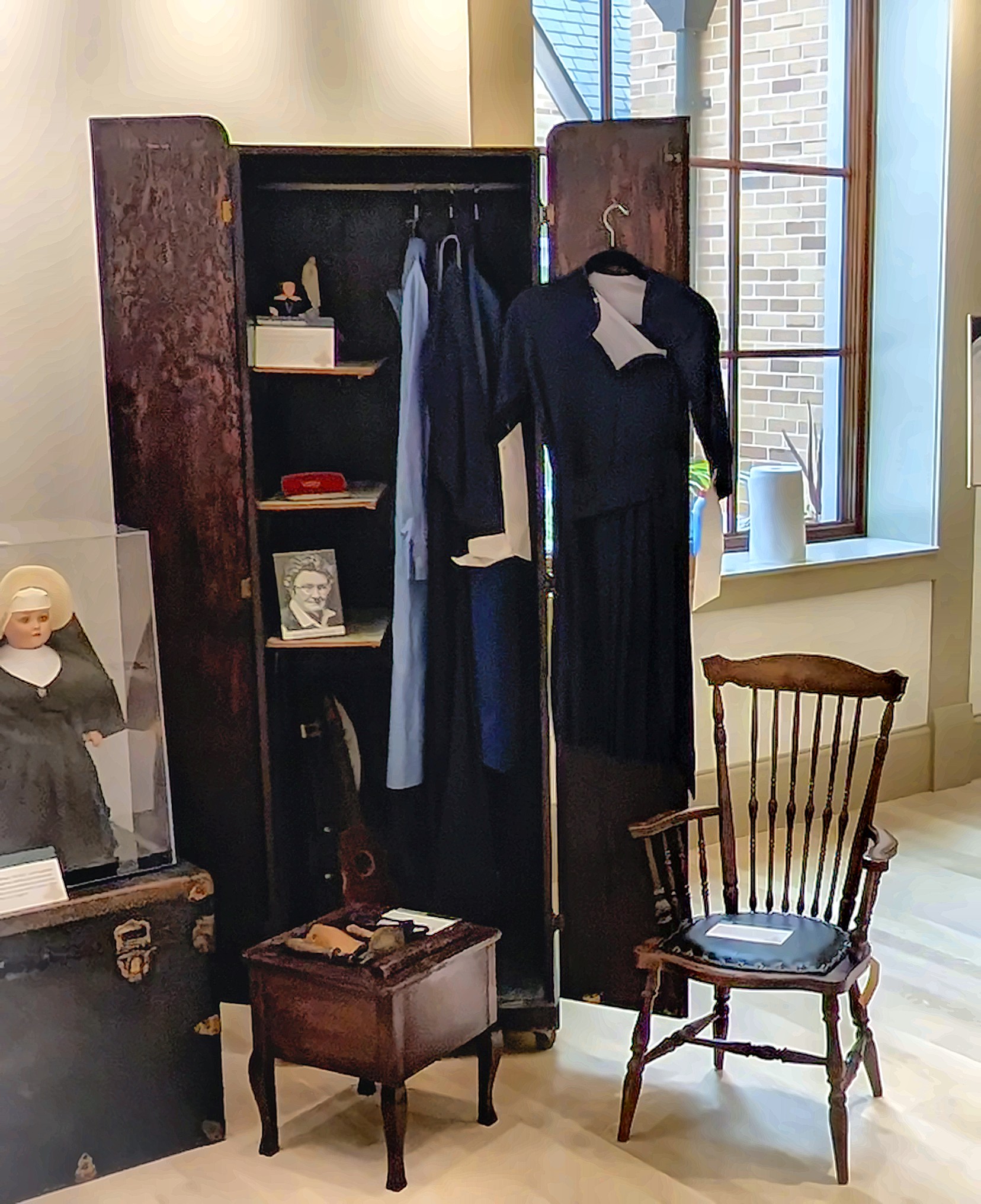
This wooden dresser was handcrafted by Sister Effie McConnell of the Our Lady of Victory Missionary Sisters, made sometime between 1922 and 1929 during the early years of the Victory Noll community in Huntington, Indiana. It represents the kind of personal clothing space typically used by women religious throughout their careers in community.

Made by her own hands, the cabinet reflects the intersection of the vows of poverty and manual labor with the practical demands of daily convent life. Sisters owned little, and what they kept was carefully ordered. This modest piece of furniture stands as a tangible record of one sister's ingenuity and craftsmanship — and of a way of life organized around simplicity and self-sufficiency.

5
75th Anniversary Uniforms by Sister Gabrielle

Exhibit Item 5

75th Anniversary Uniforms by Sister Gabrielle

Our Lady of Victory Missionary Sisters


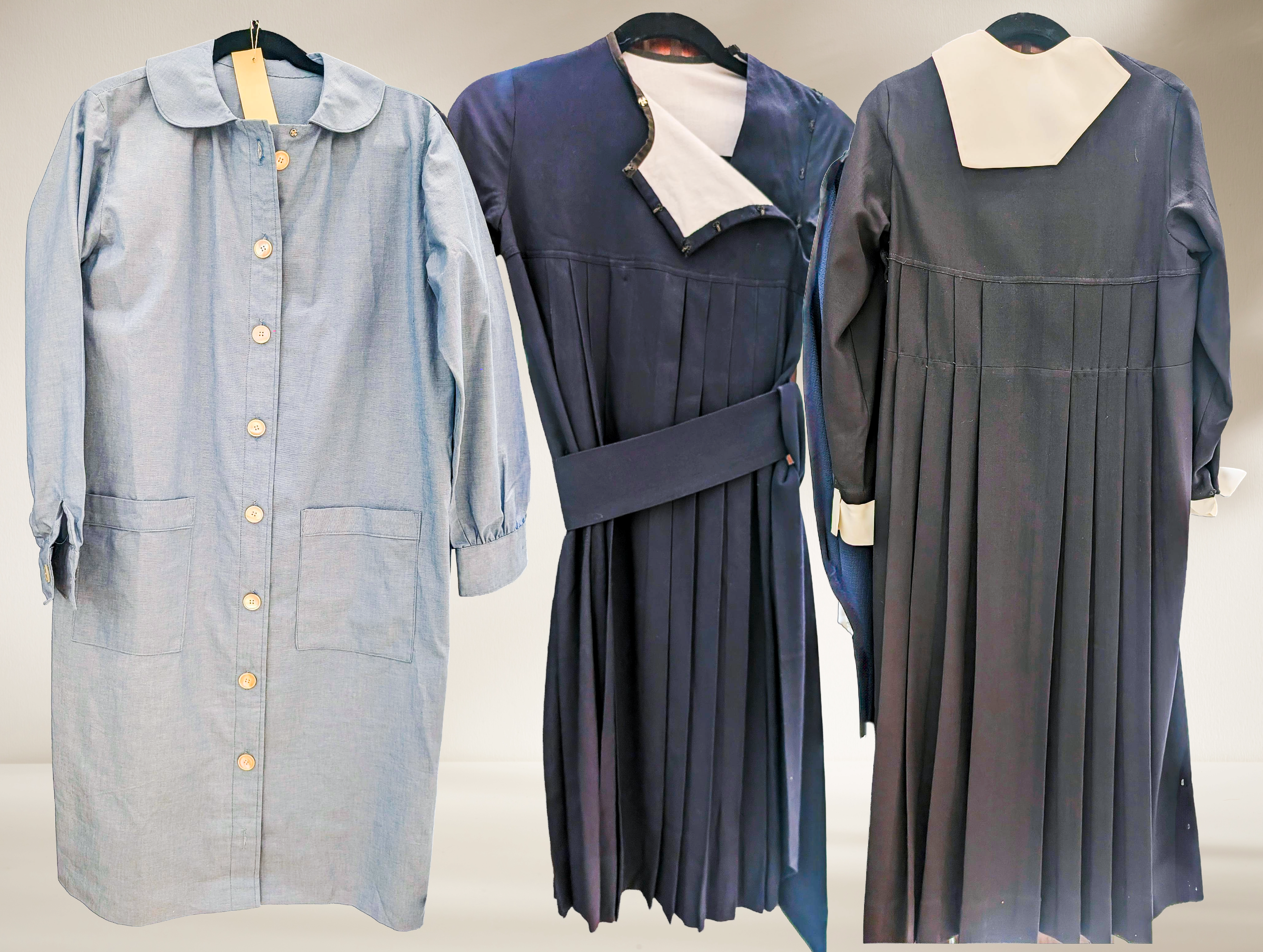
Created by Sister Gabrielle to mark the congregation's 75th anniversary, this set of three uniforms illustrates the distinct stages of formation in women religious life. The collection includes a work dress representing daily labor and community service; a postulant's uniform, worn during the first period of formal discernment before full entry; and a novitiate uniform, donned as a sister moved into deeper preparation for final vows.

Each garment marks a threshold — a visual language of belonging and becoming that structured the interior journey of religious formation. Together they trace the arc from aspirant to novice, preserving in fabric and stitch the stages through which every sister passed on her way to full profession.

6
Shoe Cobbler Table and Tools

Exhibit Item 6

Shoe Cobbler Table and Tools

Sisters of Charity of the Blessed Virgin Mary


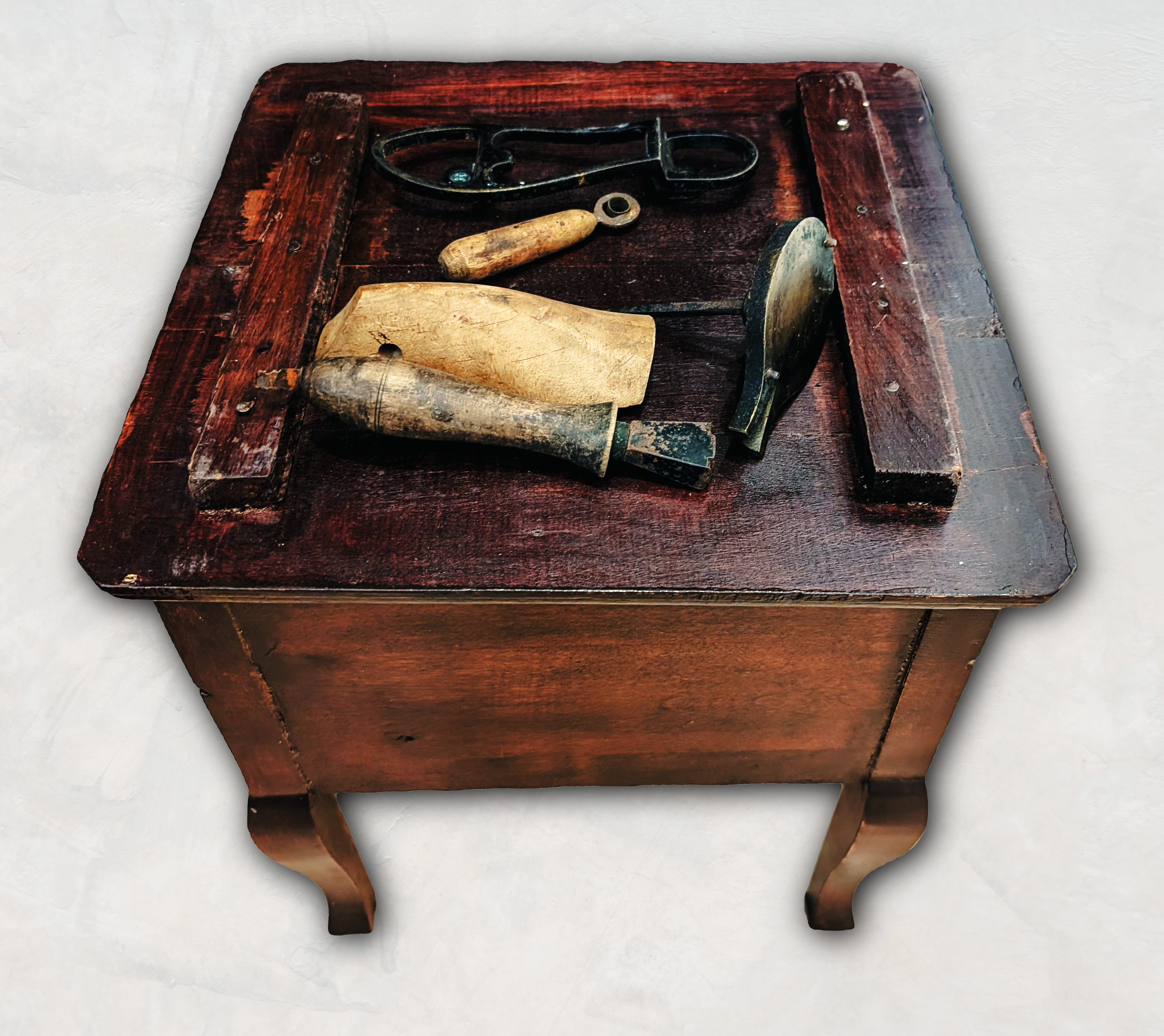
This cobbling table and its accompanying tools represent the traditional practice by which many communities of women religious made and repaired their own footwear as an expression of their vows of poverty and manual labor. Rather than purchasing shoes, sisters learned to cut leather, sole, and stitch — maintaining their own shoes for years and passing the skill from one generation of sisters to the next.

The cobbler's table was a common fixture in convent workrooms well into the mid-twentieth century. It speaks to the profound self-sufficiency that governed religious community life — an economy of care in which nothing was wasted and every sister contributed through her hands to the sustenance of the whole.

7
Mary Frances Clarke Mission Bonnet and Cap

Exhibit Item 7

Mary Frances Clarke Foundress Personal Mission Bonnet and Cap

Sisters of Charity of the Blessed Virgin Mary


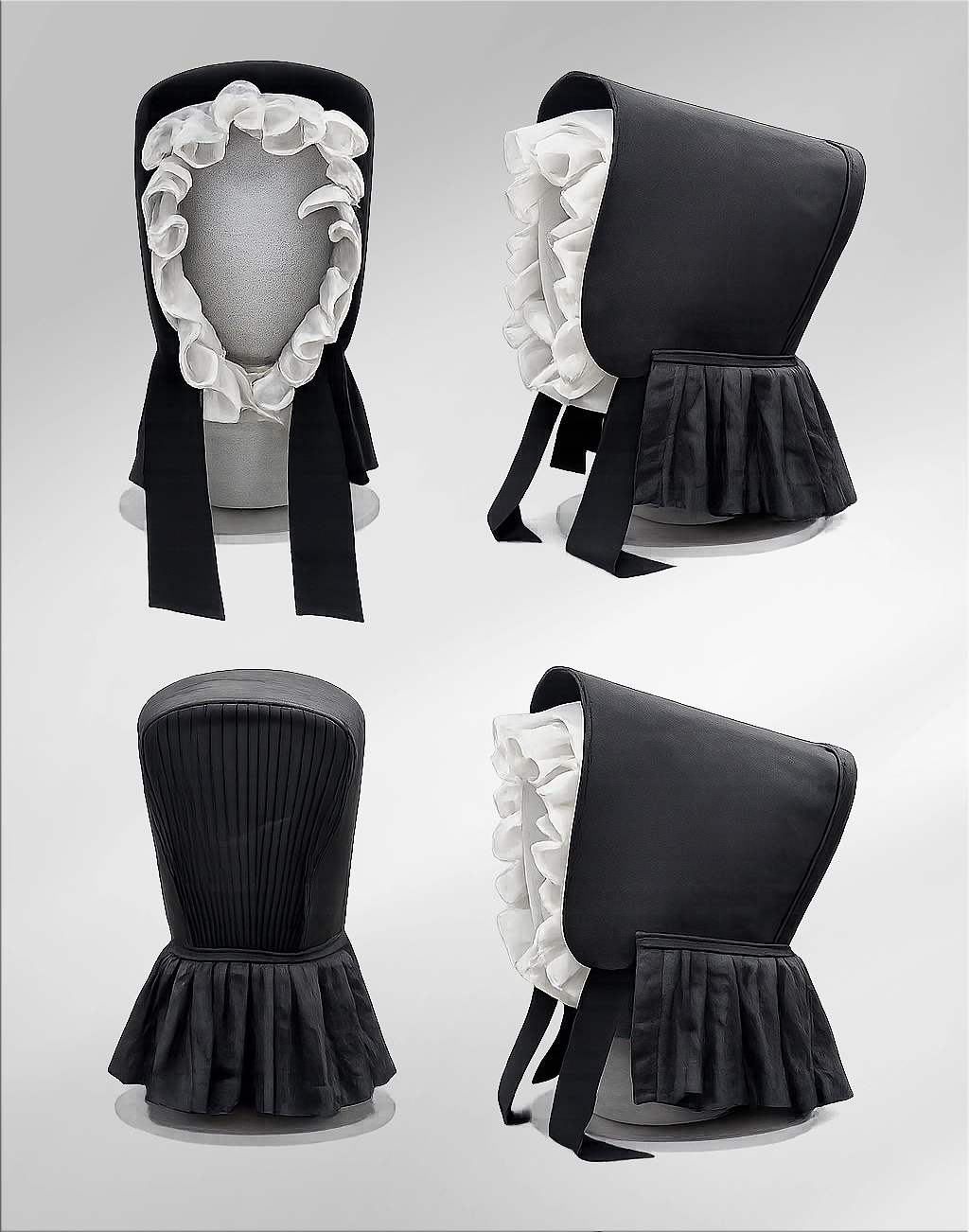
These personal garments belonged to Mary Frances Clarke, founder of the Sisters of Charity of the Blessed Virgin Mary. Born in Dublin, Ireland in 1802, Clarke emigrated to Philadelphia and gathered a small community of Irish women around a vision of Catholic education. She assumed full congregational leadership in 1869 and guided the community until her death on December 4, 1887.

Under her leadership, the BVM Sisters established nine boarding academies and forty parish schools for young women across the Midwest and beyond. The last institution founded during her tenure was in San Francisco. The bonnet and cap — worn by Clarke herself on mission — are among the most personal artifacts in HARC's collections, connecting visitors directly to the hands and presence of one of American Catholic education's founding figures.

8
Sister Madge Full Habit on Mannequin

Exhibit Item 8

"Sister Madge" — Full Habit on Mannequin

Sisters of Charity of the Blessed Virgin Mary


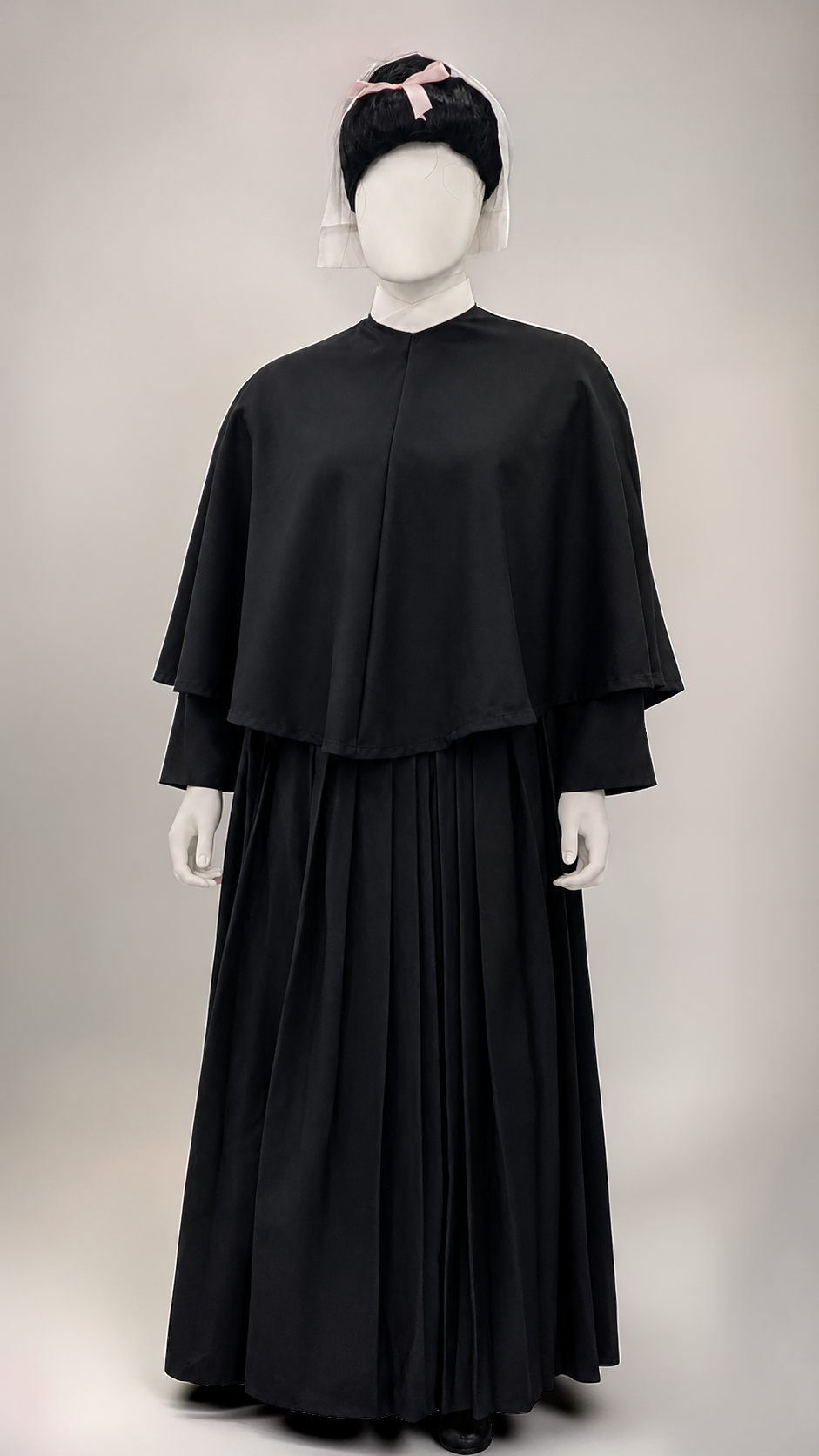
This full habit display, affectionately known as "Sister Madge," presents the complete traditional dress of the Sisters of Charity of the Blessed Virgin Mary as it was worn for generations. The BVM habit was a distinctively all-black ensemble distinguished by its unique cornette — the structured, winged headdress that made BVM sisters immediately recognizable in the parishes, schools, and communities they served.

Displayed on a mannequin, the complete habit communicates what photographs alone cannot: the scale, weight, and presence of this garment in daily life. For women who wore it for decades, the habit was not merely clothing — it was identity, vocation, and visible witness. "Sister Madge" invites visitors to encounter that reality in three dimensions.

9
Miniature Altar with Priest — created by the parents of Sister Marie Welter, OLVM

Exhibit Item 9

Miniature Altar with Priest

Our Lady of Victory Missionary Sisters


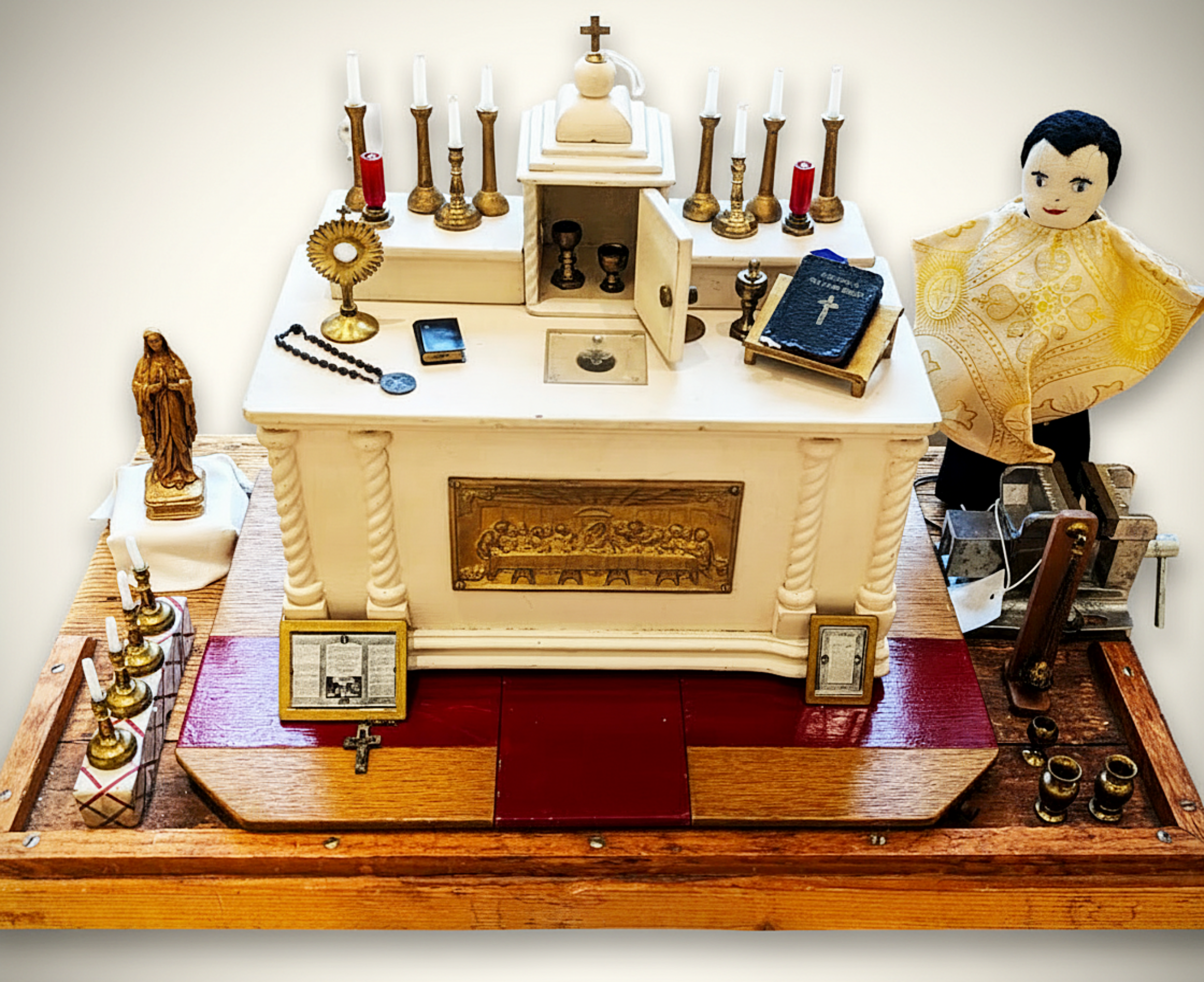
This intricate miniature altar was created by the parents of Sister Marie Welter, OLVM (1916–2011) as a gift to their daughter and her community. The piece reflects a remarkable collaboration of parental craft and devotion: her father, drawing on his machining skills, built the altar structure and fabricated the small metal liturgical objects with precision; her mother sewed the miniature vestments and linens by hand, replicating in miniature the sacred textiles used in the full-scale sanctuary.

Objects like this altar speak to the deep bonds between women religious and their families of origin — the ways in which parents expressed pride, love, and spiritual solidarity through making. The altar also captures, in miniature, the world of the Mass as it was celebrated in the mid-twentieth century, before the liturgical reforms of the Second Vatican Council, preserving a visual record of Catholic devotional life as Sister Marie and her generation would have known it.

10
Chair belonging to Mother Gertrude Regan, BVM

Exhibit Item 10

Chair — Mother Gertrude Regan

Sisters of Charity of the Blessed Virgin Mary


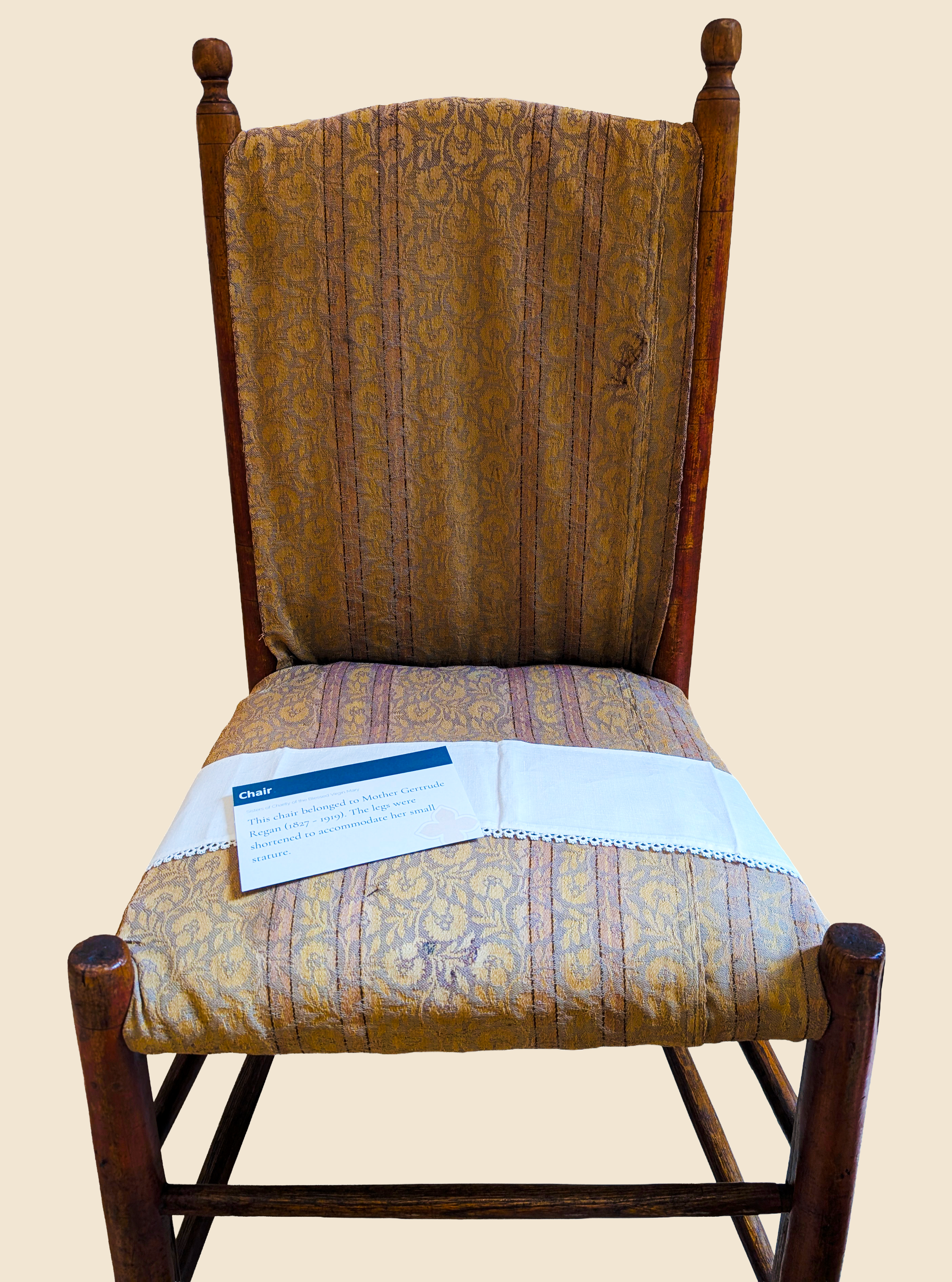
This chair belonged to Mother Gertrude Regan (1827–1919) of the Sisters of Charity of the Blessed Virgin Mary. The legs were shortened to accommodate her small stature — a practical adaptation that also carries an unexpectedly tender quality, a piece of furniture quietly reshaped to fit one person's body and comfort.

Mother Regan served the BVM congregation through much of the latter nineteenth and early twentieth centuries, and this chair accompanied her through that long ministry. That it was preserved and passed down rather than discarded reflects the congregation's recognition of the intimate connection between a leader's life and the objects that attended it — a chair that held the weight of decisions, prayer, and decades of service.

11
Chair belonging to Mother Mary Frances Clarke, first Mother General of the BVM Sisters

Exhibit Item 11

Chair — Mother Mary Frances Clarke

Sisters of Charity of the Blessed Virgin Mary


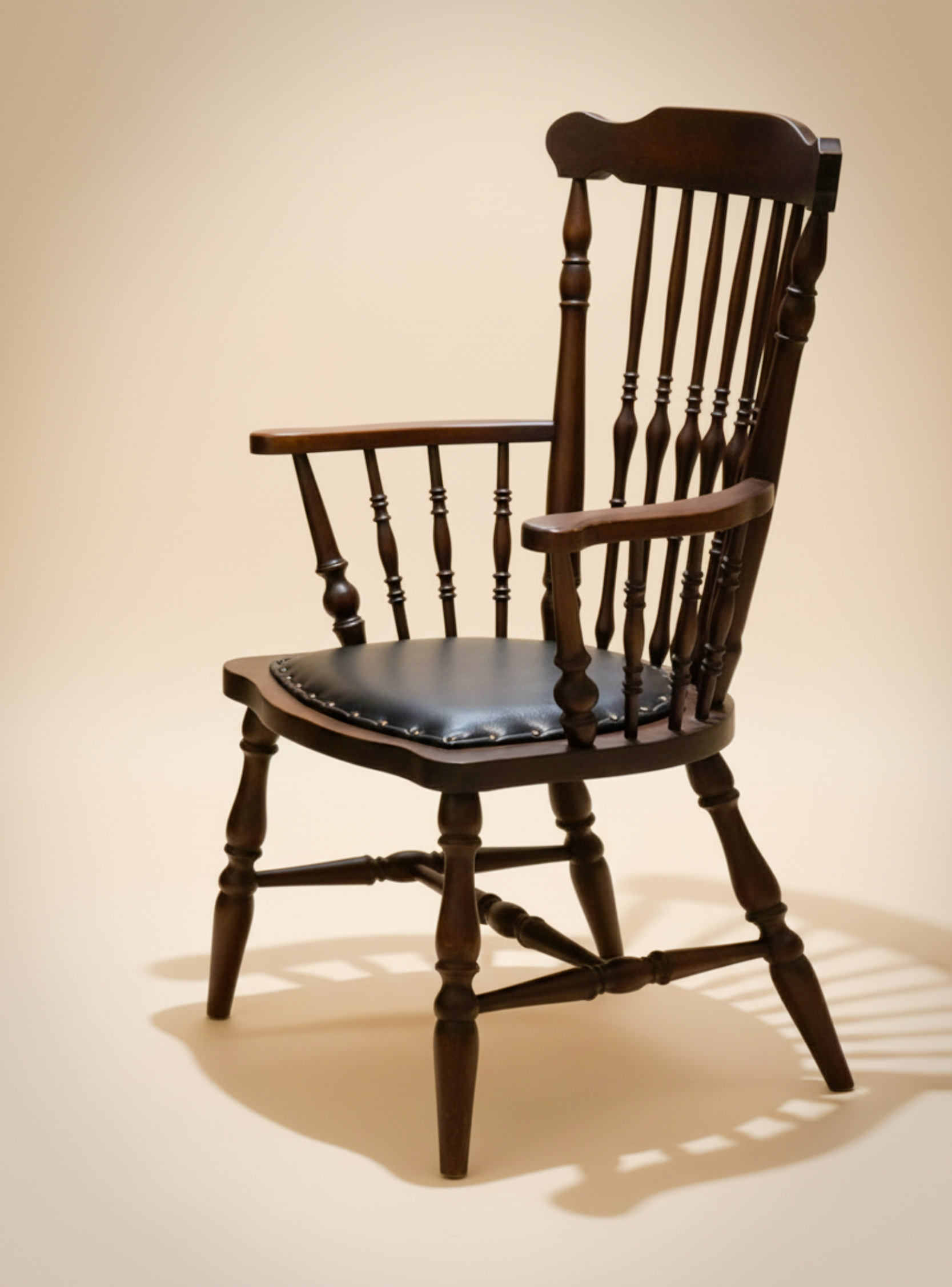
This wood and leather chair originally belonged to Mother Mary Frances Clarke (1802–1887), first Mother General of the Sisters of Charity of the Blessed Virgin Mary and founder of the congregation. After her death, the chair passed to her successor Mother Gertrude Regan (1827–1919) — and its legs were shortened to suit Mother Regan's smaller frame, leaving a physical record of that passage of leadership written into the chair's very structure.

The chair thus carries the presence of two foundational figures across two generations of BVM leadership. It is both a relic of the congregation's founding vision and evidence of its living continuity — an object transformed by use, adapted rather than retired, still in service long after the hands that first rested on it were gone.